
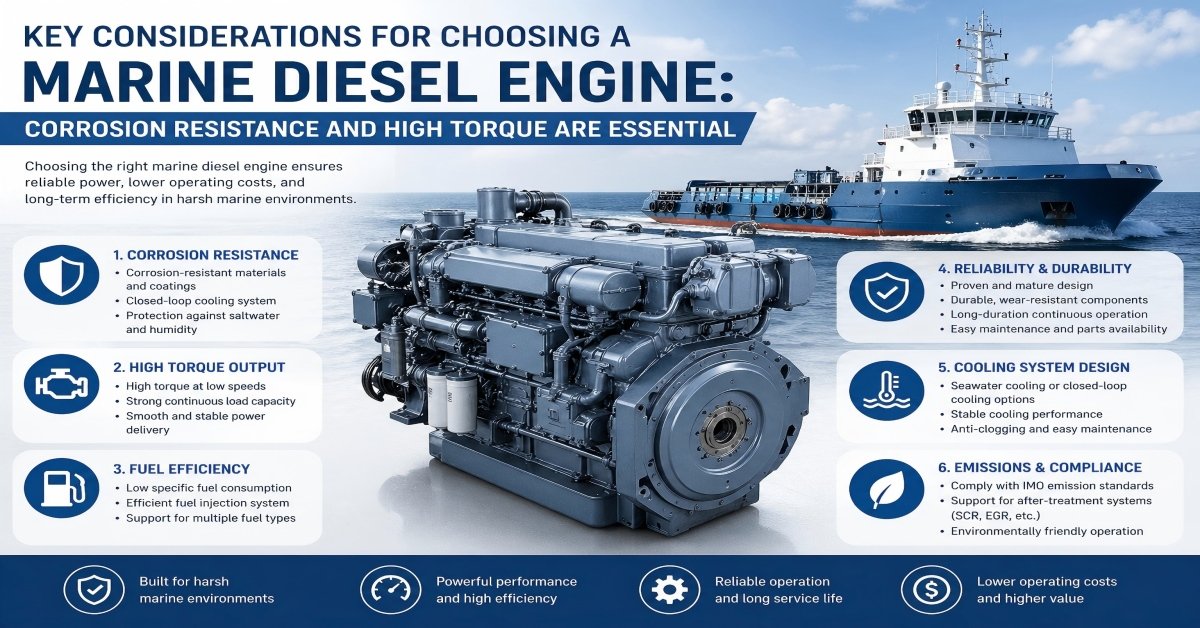
In a vessel’s power system, the performance of the diesel engine directly determines reliability and operational efficiency. Unlike land-based engines, marine diesel engines operate in harsh conditions with high humidity, salt exposure, and continuous loads. Therefore, selecting the right engine is not just about power output—it’s about durability and adaptability to the marine environment. Here are the key factors you should consider.
1. Corrosion Resistance: The First Line of Defense
Saltwater and moisture can severely corrode metal components, significantly reducing the lifespan of equipment. High-quality marine diesel engines are designed with enhanced anti-corrosion features:
- Material Selection: Use of corrosion-resistant alloys or specially treated steel
- Surface Protection: Anti-rust coatings, plating, or advanced paint systems
- Cooling System Design: Closed-loop cooling systems to minimize direct seawater exposure
Without strong corrosion resistance, even a powerful engine will struggle to maintain long-term performance.
2. High Torque Output: Ensuring Stable Power Delivery
Marine applications—especially under heavy loads or low-speed operation—require strong torque rather than just high RPM power. Key characteristics include:
- High torque at low speeds
- Strong continuous load capacity
- Smooth and stable power output
High torque improves propulsion efficiency and ensures better vessel control in challenging water conditions.
3. Fuel Efficiency: Critical for Long-Term Cost Control
Since vessels often operate for extended periods, fuel consumption becomes a major cost factor. When selecting an engine, consider:
- Specific fuel consumption (g/kWh)
- Compatibility with different fuel types
- Efficiency of the fuel injection system
A fuel-efficient diesel engine can significantly reduce operating expenses over time.
4. Reliability and Durability: Minimizing Downtime
At sea, equipment failure can be costly and dangerous. That’s why reliability is crucial. Look for:
- Proven engine models with a strong track record
- Durable, wear-resistant components
- Capability for long-duration continuous operation
Ease of maintenance and availability of spare parts are also important for long-term usability.
5. Cooling System Design
Most marine diesel engines rely on water cooling, but designs vary:
- Seawater cooling vs. closed-loop systems
- Cooling efficiency and consistency
- Resistance to clogging and ease of maintenance
A well-designed cooling system helps prevent overheating and ensures safe operation.
6. Emissions and Environmental Compliance
With stricter environmental regulations, marine engines must meet emission standards. Consider:
- Compliance with regulations (e.g., IMO standards)
- Availability of after-treatment systems such as SCR or EGR
This not only ensures compliance but also future-proofs your investment.
Conclusion
Choosing a marine diesel engine is not just about horsepower—it’s about finding the right balance between corrosion resistance, high torque, fuel efficiency, and long-term reliability. In marine environments, durability and stability matter more than peak performance.
Whether for fishing vessels, workboats, or transport ships, selecting the right engine based on actual operating conditions will ensure safer, more efficient, and cost-effective operations.
(1).png)
.png)
(1).png)