
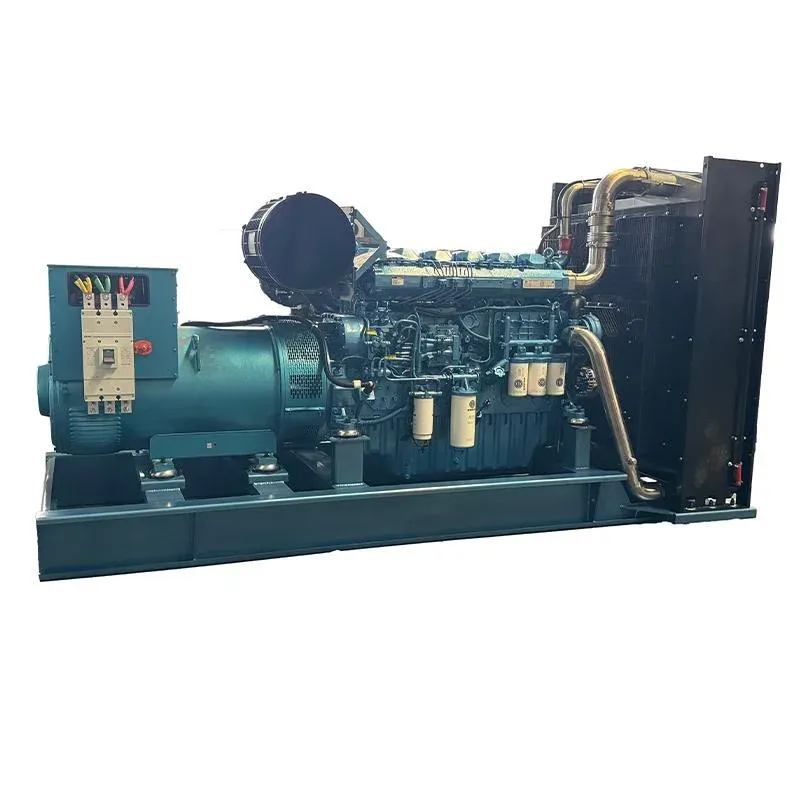
(1).png)
When purchasing a diesel engine, many users are confused by the three core parameters: "number of cylinders, power, and displacement" — should you choose a multi-cylinder or single-cylinder engine? Is the higher the power, the better? What is the relationship between displacement and fuel consumption? In fact, these three parameters are closely linked, directly determining the diesel engine's power performance, applicable scenarios and operating costs. Choosing the right one can meet your needs and save money; choosing the wrong one will either result in insufficient power or wasted fuel consumption. Today, we will use the most straightforward language to explain the three core parameters and teach you how to select accurately, so even beginners can easily avoid mistakes!
I. First, Understand: The Essential Meaning of the Three Core Parameters (No Professional Terms, Easy to Understand)
(Picture Tip: Insert a schematic diagram of the core parameters of the diesel engine, marking the corresponding positions of the number of cylinders, displacement and power for intuitive understanding)
1. Number of Cylinders: The "Basic Structure" Determining Power Output
The number of cylinders refers to the number of cylinders in the diesel engine. Common ones are 4-cylinder and 6-cylinder, a few small models are 2-cylinder, and large heavy-duty models are 8-cylinder and above. It mainly affects power stability and torque:
- 2-cylinder/3-cylinder: Mostly small diesel engines (displacement ≤1.5L), low power (≤30kW), suitable for small water pumps and micro generator sets. Advantages: small size and low cost; Disadvantages: weak power and large operating vibration.
- 4-cylinder: Mainstream medium-sized models (displacement 2.0-4.0L), power 50-100kW, suitable for small generator sets, agricultural machinery and light-load construction machinery (such as small loaders). It balances power and economy and is the most commonly used number of cylinders in the market.
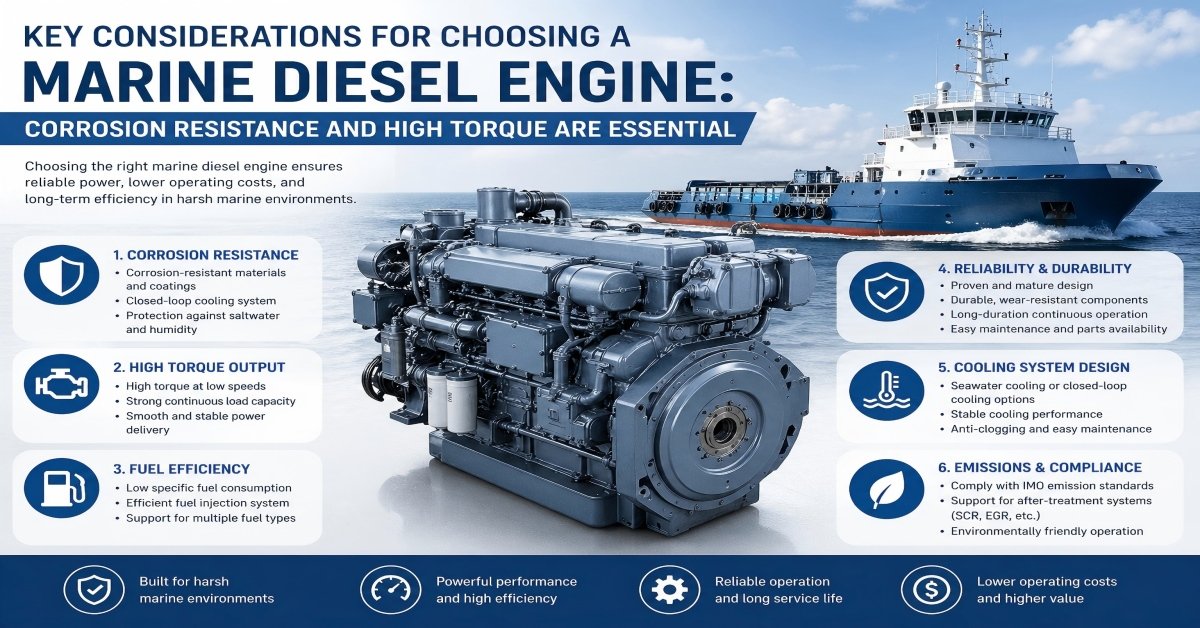
- 6-cylinder: Medium and large-sized models (displacement 5.0-8.0L), power 100-200kW, suitable for medium and large generator sets, heavy-duty construction machinery and marine power. It has strong power and stable operation, suitable for long-term continuous operation and high-load working conditions.
- 8-cylinder and above: Large heavy-duty models, displacement ≥10L, power ≥200kW, suitable for large power stations, heavy ships and mining equipment. High cost and fuel consumption, not needed for ordinary scenarios.
Key Summary: The more cylinders, the stronger the power and the more stable the operation, but the larger the size, the higher the cost and fuel consumption. Choose according to your needs, no need to blindly pursue more cylinders.
2. Displacement: The "Reserve" of Power Output
Displacement refers to the sum of the working volumes of all cylinders (unit: L). Simply put, it is the "total capacity of the cylinders", which is directly related to power and fuel consumption. The core rule is: under the same number of cylinders, the larger the displacement, the stronger the power and the higher the fuel consumption.
- Small displacement (≤2.5L): Mostly 4-cylinder models, power ≤60kW, suitable for small agricultural machinery and household generator sets. Low fuel consumption and maintenance cost, suitable for light-load and short-time operation.
- Medium displacement (2.5-6.0L): 4-cylinder or 6-cylinder models, power 60-120kW, suitable for small and medium-sized generator sets and light-medium construction machinery. It balances power and fuel consumption and is the most general displacement range.
- Large displacement (≥6.0L): Mostly 6-cylinder and above models, power ≥120kW, suitable for large generator sets, heavy-duty engineering and marine power. Sufficient power reserve to cope with long-term high-load operation.
Myth Reminder: Displacement ≠ fuel consumption. A larger displacement does not necessarily mean higher fuel consumption — under the same power, a large-displacement model may be more fuel-efficient (because of sufficient power reserve, no need for high-load operation). The key is to match the scenario.
3. Power: The "Power Indicator" of the Diesel Engine
Power (unit: kW/HP) is the core to measure the power output capacity of the diesel engine, directly determining how large equipment it can drive. It is divided into rated power and maximum power. For daily selection, just look at therated power (rated power: the maximum power for long-term stable operation).
Supplementary Conversion (Universal for Foreign Trade/Domestic): 1kW≈1.341HP (Imperial Horsepower, used for foreign trade), 1kW≈1.36PS (Metric Horsepower, used for domestic nameplates). For example, 80kW≈107HP, 110kW≈147HP.
- Low power (≤50kW): Suitable for small water pumps, micro generator sets (≤50kW) and small agricultural machinery, for daily light-load operation.
- Medium power (50-150kW): Suitable for small and medium-sized generator sets (50-150kW), loaders, tractors and small ships, meeting the needs of most industrial and agricultural scenarios.
- High power (≥150kW): Suitable for large generator sets (≥150kW), heavy construction machinery, large ships and mining equipment, coping with high-load and long-term continuous operation.
Myth Reminder: The higher the power, the better! Excessive power will lead to high purchase cost and fuel consumption, resulting in power waste; insufficient power will cause insufficient power, inability to drive equipment and engine damage due to overload.
II. Core Logic: The Relationship Between Number of Cylinders, Power and Displacement (Key to Correct Selection)
The core relationship between the three: the number of cylinders determines power stability, displacement determines power reserve, and power determines actual usable power. The three are matched with each other, and you cannot only look at one parameter:
- Same number of cylinders → larger displacement → higher power (for example, 4-cylinder model, 2.5L displacement has power about 65kW, 3.0L displacement has power about 80kW);
- Same displacement → more cylinders → more stable power (for example, 6.0L displacement, 6-cylinder model runs more stably than 4-cylinder model, suitable for long-term power generation);
- Same power → more cylinders → more uniform fuel consumption (for example, 100kW power, 6-cylinder model has stronger load capacity than 4-cylinder model, and is more fuel-efficient for long-term operation).
III. Precise Selection Guide (Choose According to Scenarios, Avoid Mistakes)
(Picture Tip: Insert a picture of the selection scenario corresponding table, corresponding scenarios, number of cylinders, power and displacement for users to check and choose intuitively)
1. Agricultural/Small Household Scenarios (Light Load, Short-Time Operation)
Adaptation: Small tractors, small water pumps, household/store backup generator sets (≤50kW)
Selection Suggestion: 4-cylinder, small displacement (1.5-2.5L), power 30-50kW. Prioritize naturally aspirated models with low cost, low fuel consumption and easy maintenance.
2. Small and Medium-Sized Industrial/Engineering Scenarios (Medium Load, Intermittent Operation)
Adaptation: Small and medium-sized generator sets (50-150kW), small loaders, medium tractors, small fishing boats
Selection Suggestion: 4-cylinder/6-cylinder, medium displacement (2.5-6.0L), power 50-150kW. Prioritize turbocharged models (strong power and excellent fuel consumption), such as 4-cylinder 65kW (2.5L) and 6-cylinder 110kW (6.75L).
3. Large-Scale Industrial/Heavy-Load Scenarios (Heavy Load, Long-Term Continuous Operation)
Adaptation: Large generator sets (≥150kW), heavy loaders, large ships, mining equipment
Selection Suggestion: 6-cylinder and above, large displacement (≥6.0L), power ≥150kW. Prioritize turbocharged intercooled models (strong power and good durability), such as 6-cylinder 180kW (6.426L).
IV. Common Selection Mistakes (Focus on Avoiding)
- Mistake 1: The more cylinders, the better → 6-cylinder models are more expensive and fuel-consuming than 4-cylinder models. If it is only light-load operation, 4-cylinder is completely sufficient, no need to spend more money;
- Mistake 2: The higher the power, the better to use → Excessive power beyond equipment needs will lead to high purchase cost and daily fuel consumption. For example, to drive a 50kW generator set, choosing an 80kW diesel engine is a waste;
- Mistake 3: The smaller the displacement, the more fuel-efficient → Small-displacement models have insufficient power reserve. When driving heavy-load equipment, the engine runs at high load for a long time, which is more fuel-consuming;
- Mistake 4: Only look at power, not the number of cylinders/displacement → Under the same power, 6-cylinder models run more stably and have stronger load capacity than 4-cylinder models, suitable for long-term power generation.
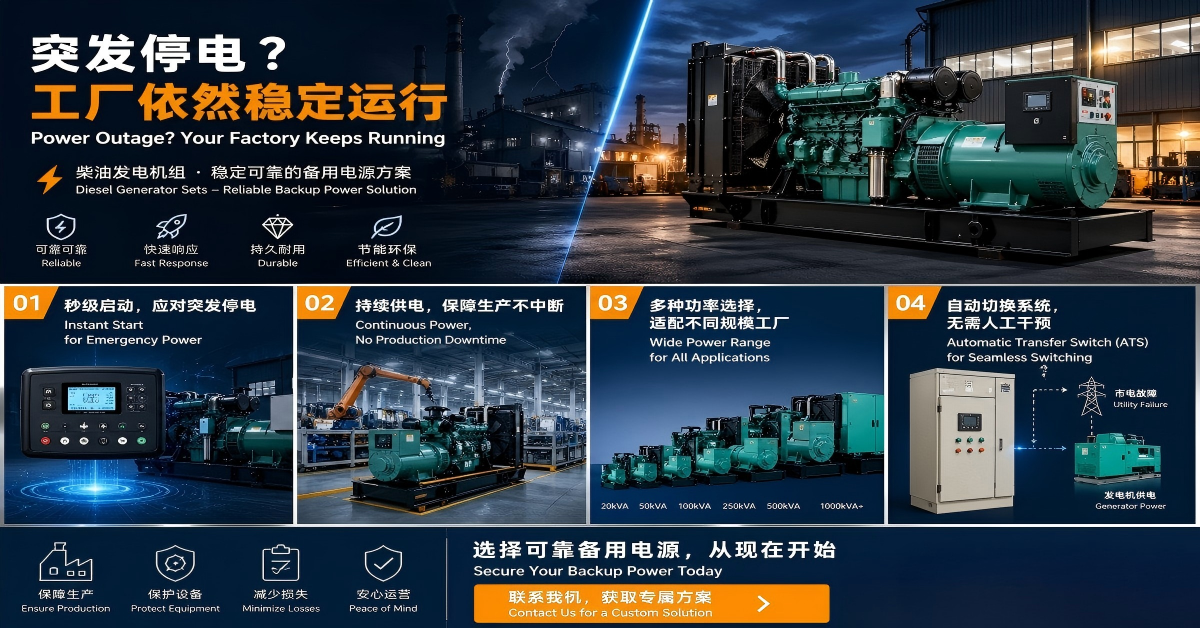
Summary: The core of selection is "matching the scenario" — first clarify your equipment needs (how much power equipment to drive, whether to run for a long time, and load size), then select the number of cylinders, power and displacement accordingly. The matching of the three can not only meet the needs, but also save purchase and operating costs. If you need to customize a selection plan according to specific equipment (such as generator set power, construction machinery type), please contact us, and our professional team will recommend it accurately for you!
(1).png)
.png)